Cyber Risk Management for Small Businesses: Action, Not Checklists
What you need to know
Managing cyber risk doesn’t mean buying the most expensive software on the market or trying to read a 100-page technical report. If you run a small business, you don't have the time or the budget to chase every single security alert.
Instead, practical risk management is simply about answering three everyday questions:
- What could seriously disrupt our business operations?
- How likely is that specific event to happen?
- What needs our immediate attention and investment?
Why Generic Security Checklists Fail SMEs
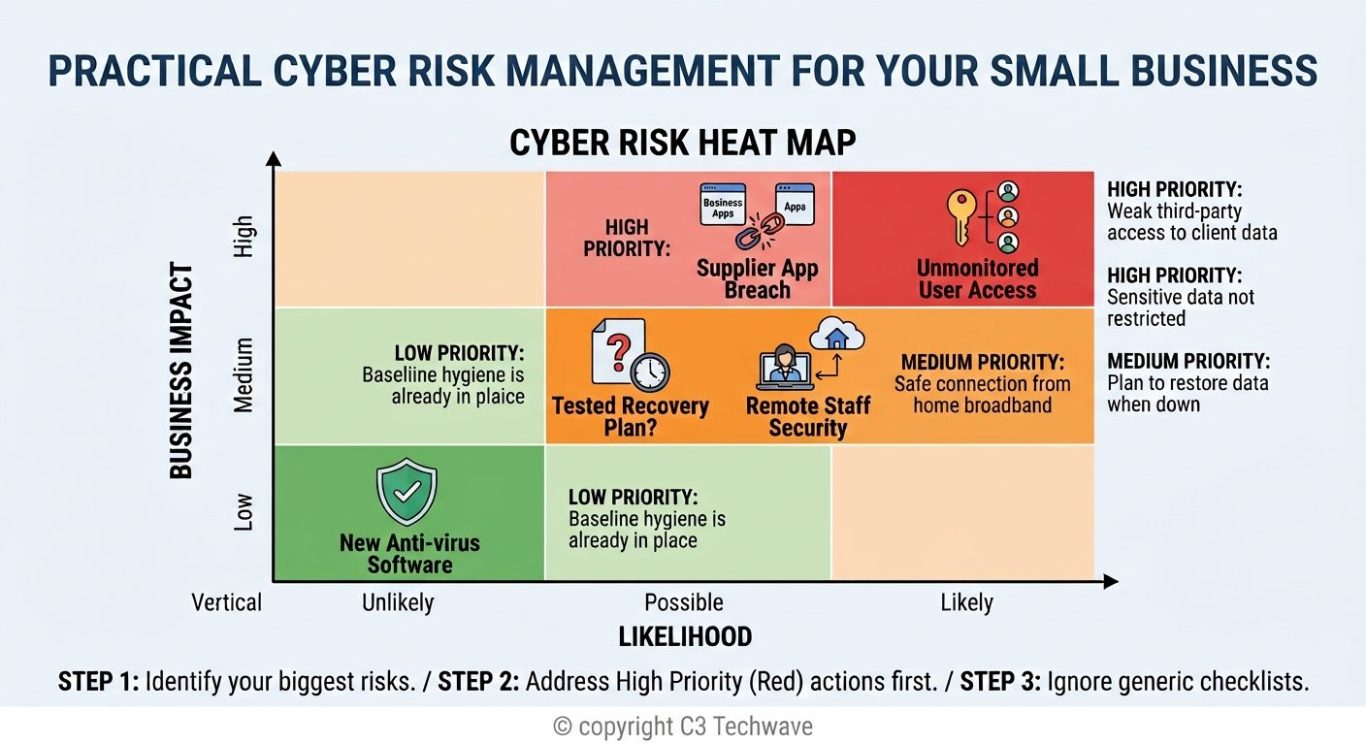
Many small businesses are handed massive, generic security checklists. Without a sense of priority, it is incredibly easy to spend money on flashy, highly visible tools while leaving your most critical vulnerabilities completely wide open. For example, a business might invest heavily in a brand-new anti-virus suite but completely overlook these critical risk areas:
Weak Supplier Controls: Your own IT might be secure, but what happens if a third-party billing app you use gets breached?
Excessive User Access: Do all employees have unrestricted access to your most sensitive client files, or only the people who genuinely need it?
No Tested Recovery Plan: If your systems went down tomorrow, do you know exactly how to restore your data, or are you just hoping your backups work?
Prioritising What Matters
You already know that things like phishing emails and data loss are out there. The real value comes from figuring out which specific threats actually pose the biggest danger to your unique operations.
When we evaluate your business risk, we map it out across a simple, color-coded grid—often called a risk heat map. Instead of giving you a massive list of tech problems, it shows you exactly where an attack would cause the most financial or operational harm.
How to Build a Proportional Plan
To keep your security setup lean and effective, your focus should be based on real-world business factors rather than fear:
Your Important Systems: Protect the core software and client data that keep the lights on daily.
Staff Behaviour: Focus on basic team awareness—like recognizing a spoofed invoice email—rather than just installing more background software.
Remote Working: Ensure employees connecting from home broadband networks aren't accidentally exposing your company files.
The Bottom Line: Real security isn't about eliminating every single minor risk—that's impossible. It's about knowing exactly where your business is exposed and making a smart, prioritised plan to protect it.
Turn Your Risk Into a Practical Plan
Stop guessing which security measures your business actually needs. At C3 TechWave, we help UK small businesses ditch the confusing tech checklists. We look at your actual operations, identify your highest-priority risks, and hand you a straightforward, step-by-step improvement plan.

Not sure where to start?
Tell us what you are dealing with. We will tell you if we can help . That conversation costs nothing and commits neither side to anything.